- Commercial Greenhouse
- Film Greenhouse
- PC Greenhouse
- Glass Greenhouse
- Tunnel Greenhouse
- Scientific Research Greenhouse
- Vegetable Greenhouse
- Flower Greenhouse
- Multi-span Greenhouse
- Sawtooth Greenhouse
- Greenhouse Equipments
- Greenhouse Accessories
- Hot Dip Galvanized Pipe
- Irrigation System
- Hydroponics System
- Planting Tools
- Planting technology
Tel: +86 191 5068 3942
Fax:
Mobile: +86 191 5068 3942
Contact: Alina
E-mail: sales@cngreenhouses.com
SKYPE:


Glass Greenhouse Accessories: Vents to Controls
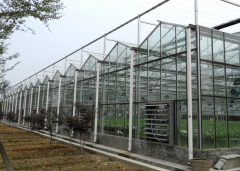
Glass greenhouse accessories in one list: roof and side vents, internal and external shading, benches, fill light, heating and one control panel.
.
TEL:+86 191 5068 3942
- Features


The glass shell is only half of a working glass greenhouse. The other half is the accessory package: windows that let heat out, screens that keep sun off, benches that lift the crop, lamps that extend the day, pipes that hold night temperature, and the panel that runs them together.
Basic Information
A 15 m x 30 m glass greenhouse, single layer, small scale, 450 square metres, wind load 0.35 kN/m2 and snow load 0.35 kN/m2, exported worldwide. Application: scientific research, high-end seed nursery and hydroponics.
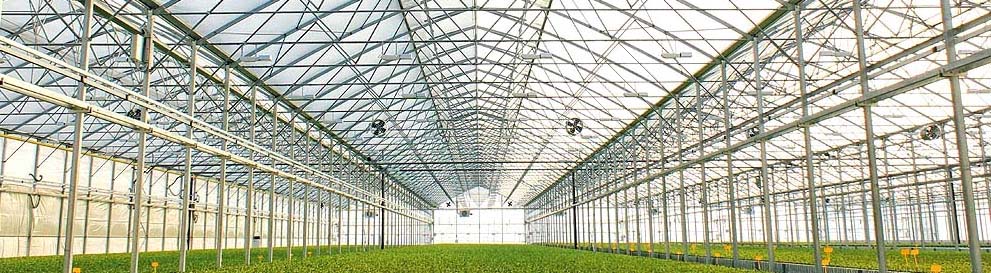
The frame is hot dip galvanized steel pipe on a gable roof, with gable spans of 8 to 10.8 metres and a total structure height of 4 to 5.3 metres. The covering is 4 mm or 5 mm float glass or 5 mm tempered glass, above 90 percent light transmittance, suitable for all climate conditions and adaptable to any landscape; single slope and dual slope houses are built the same way. Glass brings a low coefficient of thermal expansion and contraction, transmittance that beats a PC board house, ready availability so one pane is easy to replace, optimum UV resistance and barrier ability, and a workable answer to varied and complex topography. Against that it costs more than a film or sheet covering, installation and maintenance ask more care, and in some climates weather limits how much of the year the house can be used as intended. It sits in the glass greenhouse range; its spares come from the greenhouse accessories range.
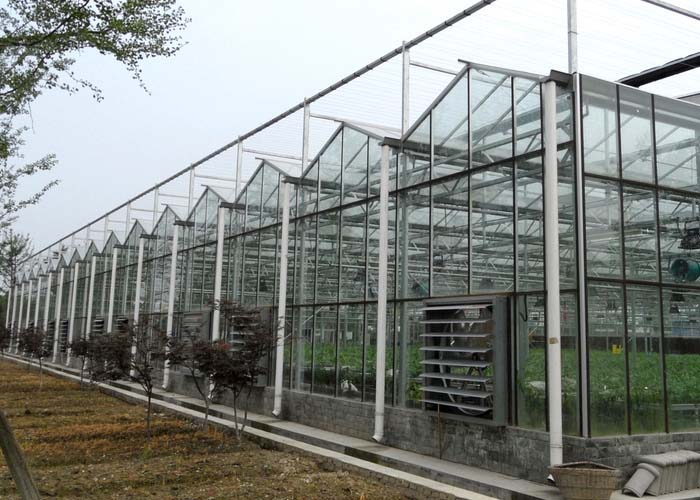
A Closed Glass House Needs Windows First
Glass holds heat in: short-wave sunlight passes through it, but the long-wave radiation given back by the crop, the floor and the benches does not, so in a sealed shell that heat, and the moisture the crop transpires, have nowhere to go. The first accessory is therefore an opening system: ridge vents along the roof and vents in the side walls.
They work differently. Ridge vents open at the highest point, where the warmest air collects, and pull air out by stack effect; side vents admit incoming air and set up a cross-flow across the crop. Together they cool in summer and keep the air exchange that dries leaves and discourages condensation and disease. Vent area follows the heat and moisture the crop makes at your summer peak and the wind the site sees: a hot, still site wants generous roof vent area with both sides opening, a windy, cold site wants stiffer sashes and finer control, so vents are usually motorised on a rack and pinion and opened in steps by the controller, with hand winches only on the smallest houses. Our hardware is the natural ventilation system.
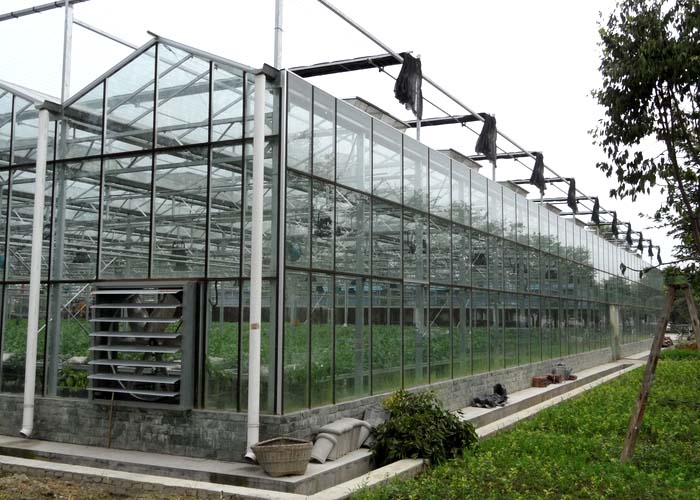
Shading Inside and Outside Are Two Different Jobs
Shading is often bought as one item, but an internal screen and an external screen do different work.
An external screen sits above the roof and stops radiation before it reaches the glass, so the heat never enters the house; the strongest single measure against cooling load, but it stands in wind and must be fixed and tensioned for it. An internal screen hangs on rails under the roof, reflects or absorbs radiation already inside, lowers crop-level temperature, and closed at night works as an energy screen. So a sunny site is served best by an external screen first, a project wanting night energy saving and humidity control by an internal one, and many houses run both on the same rails under one controller. Our screens are the internal shading screen.
Benches, Fill Light and Heating: Matching Spares to the Crop
These three follow the crop, so they are chosen after the crop and the season are fixed.
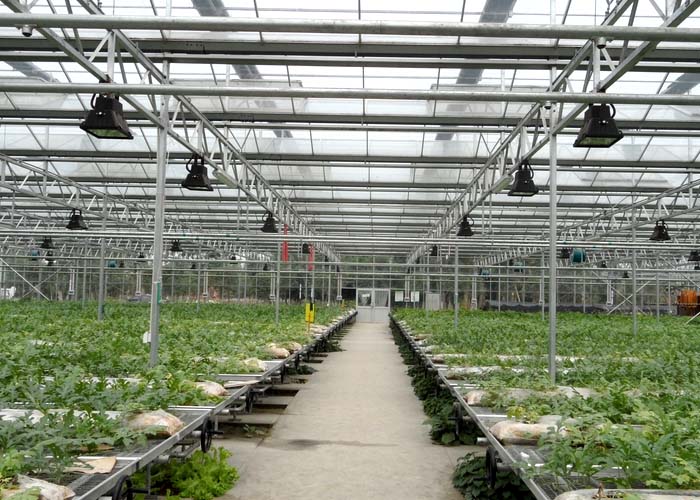
Benches raise the crop off the floor, giving air movement around the pots, drainage away from the root zone, light at low level and a sensible working height for sowing, grading and harvest. In a high-end seed nursery and hydroponics house the choice is between fixed benches, simple and suited to wide aisles, and mobile benches that slide over the aisle and give that floor back to the crop when plants per square metre matter.
Fill light is added when natural light in the growing period sits below what the crop needs: in practice winter seedling production and high-value crops grown outside their natural light window, where lamps hold the photoperiod and lift daily light levels so plants stay compact. Choosing it means fixing the target light level at the canopy and the day length wanted.
Heating answers the nights, when a glass house loses heat quickly and the night setpoint matters more than the daytime maximum. Hot water pipe rails along the gutters give even heat at working height and double as a rail for internal transport, unit heaters cover the remainder, and how much is installed follows the night temperature the crop needs and the climate outside, not a fixed rule.
One Control Panel, Ordering and Support
With vents, screens, lamps and heating in one house they have to run as one system, and that is the last accessory: the climate controller. It reads temperature, humidity and light and drives each item in steps, so the house heats without opening the vents at the same time and screens close before heat is lost; alarms and logging come with the same unit. It is also what keeps the items listed above from fighting each other. Our unit is the multifunction automatic control.
Independent references help when a covered growing house is specified: the United States Department of Agriculture publishes research and extension material on controlled-environment agriculture, and Hortidaily follows greenhouse technology and daily practice in the industry.
Shipping is normally 4 to 6 weeks after receipt of order, plus transit time from the factory; 30 percent of the basic greenhouse price may be charged on receipt of order and the balance before shipment. Our company has above 35 years of professional greenhouse production history and ships worldwide every year. Our engineer department can send engineers to foreign countries to guide installation on request, and many customers visit our factory each year for business cooperation. For a glass house and its accessory package, email sales@cngreenhouses.com or call +86 191 5068 3942.
Frequently Asked Questions
Q: Which accessories should be ordered with the glass house itself?
The opening system and the control panel: ridge and side vents are glazed sashes in the same frame, and the controller drives them. Benches, screens, fill light and heating can follow the crop plan, but their rails and pipe runs are easier to allow for at the start.
The opening system and the control panel: ridge and side vents are glazed sashes in the same frame, and the controller drives them. Benches, screens, fill light and heating can follow the crop plan, but their rails and pipe runs are easier to allow for at the start.
Q: Do I need internal shading, external shading, or both?
They do different jobs. External stops radiation before it reaches the glass and is the strongest measure against cooling load; internal lowers crop-level temperature and works as an energy screen at night. A sunny site starts with external, a project wanting night saving starts with internal, and many run both from one controller.
They do different jobs. External stops radiation before it reaches the glass and is the strongest measure against cooling load; internal lowers crop-level temperature and works as an energy screen at night. A sunny site starts with external, a project wanting night saving starts with internal, and many run both from one controller.
Q: When is fill light worth adding?
When natural light in the growing period is below the crop requirement, typically winter seedling production and high-value crops grown outside their natural light window. Fix the target light level at the canopy and the day length wanted first.
When natural light in the growing period is below the crop requirement, typically winter seedling production and high-value crops grown outside their natural light window. Fix the target light level at the canopy and the day length wanted first.
Q: Where should heating pipes be run?
Along the gutters at working height, where hot water pipe rails give even heat and double as a rail for internal transport; under-bench pipes are used where the crop sits on benches. Unit heaters cover the remainder.
Along the gutters at working height, where hot water pipe rails give even heat and double as a rail for internal transport; under-bench pipes are used where the crop sits on benches. Unit heaters cover the remainder.
Q: Can one controller run vents, screens, lamps and heating?
Yes. A climate controller reads temperature, humidity and light and drives each item in steps, so the house heats without opening vents at the same time and screens close before heat is lost.
Yes. A climate controller reads temperature, humidity and light and drives each item in steps, so the house heats without opening vents at the same time and screens close before heat is lost.
Q: What are the size, covering and loads of this house?
15 m x 30 m, single layer glass covering, 450 square metres, wind and snow load 0.35 kN/m2, on a hot dip galvanized steel pipe frame with a gable roof, gable spans of 8 to 10.8 metres, total height 4 to 5.3 metres, 4 mm or 5 mm float glass or 5 mm tempered glass.
15 m x 30 m, single layer glass covering, 450 square metres, wind and snow load 0.35 kN/m2, on a hot dip galvanized steel pipe frame with a gable roof, gable spans of 8 to 10.8 metres, total height 4 to 5.3 metres, 4 mm or 5 mm float glass or 5 mm tempered glass.
Note: If you're interested in the product, please submit your requirements and contacts and then we will contact you in two days. We promise that all your informations won't be leaked to anyone.
 Deutsch
 Español
 Français
 Italiano
 Português
 日本の
日本の
 한국어
한국어
 العربية
 български
 hrvatski
 česky
česky
 Dansk
Dansk
 Nederlands
 suomi
suomi
 Ελληνικά
 हिन्दी
 norsk
norsk
 Polski
 Română
 русский
 Svenska