
- Commercial Greenhouse
- Film Greenhouse
- PC Greenhouse
- Glass Greenhouse
- Tunnel Greenhouse
- Scientific Research Greenhouse
- Vegetable Greenhouse
- Flower Greenhouse
- Multi-span Greenhouse
- Sawtooth Greenhouse
- Greenhouse Equipments
- Greenhouse Accessories
- Hot Dip Galvanized Pipe
- Irrigation System
- Hydroponics System
- Planting Tools
- Planting technology
Tel: +86 191 5068 3942
Fax:
Mobile: +86 191 5068 3942
Contact: Alina
E-mail: sales@cngreenhouses.com
SKYPE:


Glass Greenhouse Installation and Sealing System
Glass greenhouse glazing system explained: aluminium profiles and channels, gaskets and sealant, fixing order, how leaks start and how a pane is replaced.
.
TEL:+86 191 5068 3942
- Features


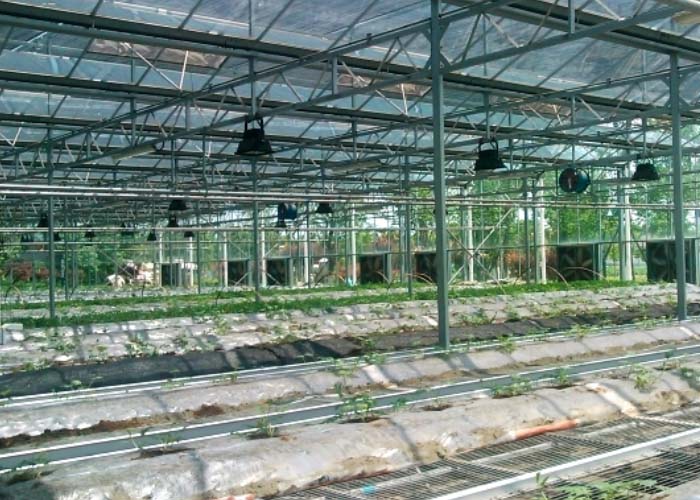
A glass greenhouse is bought for its light, but what arrives on site is a glazing system: the aluminium profiles and glass channels that carry each pane, the gaskets and sealant that close the joints, the order the panes go in, and how a leak is found and one pane changed. This page is about that system, not the sheet. The covering here is glass on a hot dip galvanized steel pipe frame with a gable roof: 15 m x 30 m, single layer, an area of 450 square metres, wind and snow load 0.35 kN/m2, exported worldwide.
Basic Information
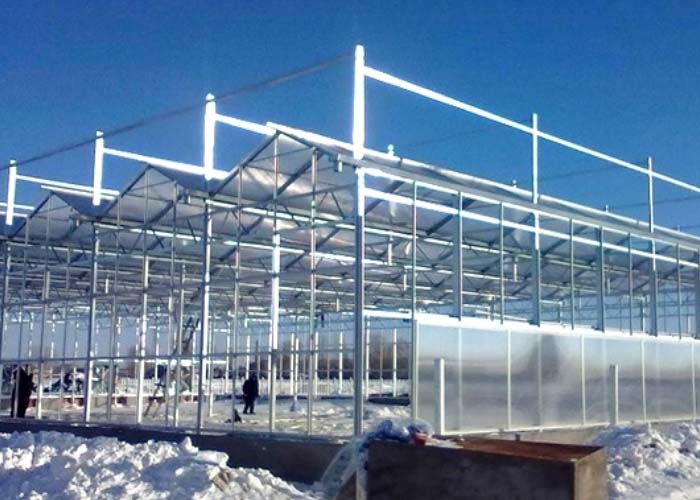
Size 15 m x 30 m. Cover material glass, single layer. Type glass greenhouse. Area 450 square metres. Wind load 0.35 kN/m2, snow load 0.35 kN/m2. Export markets: global. Application: scientific research, high-end seed nursery and hydroponics.
The frame is hot dip galvanized steel pipe on a gable roof, with gable spans of 8 to 10.8 metres and total structure height of 4 to 5.3 metres. The covering is 4 mm or 5 mm float glass or 5 mm tempered glass, light transmittance above 90 percent, suitable for all climate conditions and adaptable to any landscape. This house sits in the glass greenhouse range, and its frame is the subject of the hot dip galvanized multi-span glass house.
Profiles and Channels: How the Pane Is Held
Glass does not span between the main pipes. Each pane is carried at its edges by a glazing bar with an aluminium profile fixed along it, and that profile forms a channel the pane sits in. The channel locates the pane, sets the plane the whole wall or roof slope has to follow, and carries the pane edge rather than its face.
The channel and the clip that holds the pane are matched to the sheet. Float glass of 4 mm or 5 mm and tempered glass of 5 mm all appear on this house, and each needs the right clip for its thickness, so the glazing hardware is specified with the covering and never separately. Which sheet to choose is set out on the float versus tempered glazing page and is not repeated here. Gable spans of 8 to 10.8 metres and a height of 4 to 5.3 metres decide how many bars and how much channel have to be lined up and sealed. The roof vents are glazed sashes in the same system, which is why they are hung and adjusted last.
Gaskets, Sealant and the Order of Work
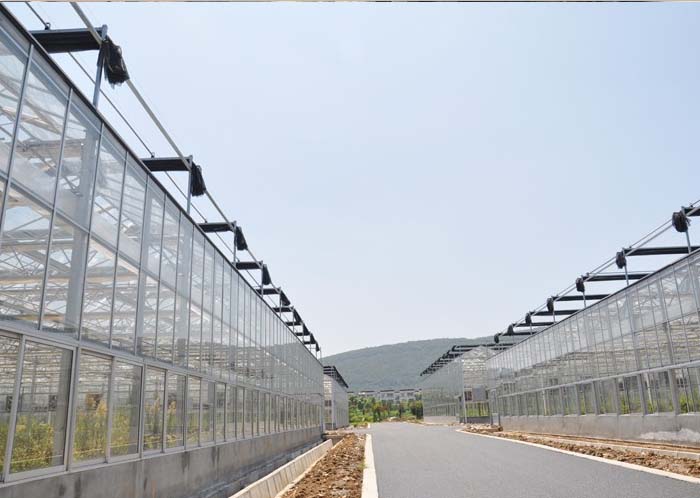
Two soft materials seal the system. A rubber gasket is a continuous strip in the channel that the pane edge presses into: it keeps glass off metal so the pane is never in hard point contact and cannot rattle, takes up the small movement frame and glass do not share, and keeps driven rain out of the channel. Glass has a low coefficient of thermal expansion and contraction, so panes and aluminium move little and the gasket only absorbs the remainder.
Sealant closes the lines a gasket cannot: the roof perimeter at the gable, the base of the wall where the lowest pane meets the kerb, the gutter node where two slopes meet, and around vent and door frames. It is run after the pane is set and clipped, so that it sits on the outside face of the joint.
The order matters more than any single part. Frame first, checked for plumb and line; then glazing bars, channels and gaskets; then panes, set from a reference line and clipped as they go. Roof planes are glazed before the walls, so the wall panes meet a finished roof edge and the gutter detail is closed before it is covered. Closing joints are sealed once the panes around them are fixed, and vents and doors are hung and adjusted last. The roof openings on this house are the ones covered by our natural ventilation system.
Leaks and Replacing a Single Pane
A glazed roof leaks at joints, not at the middle of a pane: the sealant lines at ridge and gable, the gutter node, the base of the wall where water is driven up against the lowest pane, and the gaskets around vents and doors, which compress over time. Look for the gap rather than the stain, because water entering at one joint often runs along a bar before it shows inside; the joint to open is the one outside, above the wet mark. Most of the time a sealant line or a perished gasket has failed, not the glass.
Repair is where a rigid system earns its keep. Every pane is separate and held in its own channel by its own clips, so one pane can be released and lifted out without disturbing those around it. The gasket along that run is checked and changed, and the closing joints are resealed while the opening is there. Nothing is cut or re-tensioned as on a continuous soft covering, and the frame itself is not touched.
Advantages, Limits, Shipping and Support
Glass brings a set of advantages: a low coefficient of thermal expansion and contraction, so the glazing moves little with temperature; light transmittance above 90 percent, higher than a PC board house, with a good overall appearance; ready availability, so a single pane is simple to replace; optimum UV resistance and barrier ability, so the glazing resists yellowing and chalking under UV while keeping its transmittance; and a simple, effective solution for varied and complex topographic conditions.
Its limits are real: it costs more than a film or sheet covering, installation and maintenance ask for more care, and in some climates the weather limits how much of the year it can be used as intended. In practice it runs flowers, vegetables, nursery crops, ornamental demonstration and agricultural research, in single slope and dual slope glass greenhouses alike. For the structural difference glass makes when the same frame could be filmed, see the multi span glass covering page.
Independent references help when a covered growing house is specified: the FAO publishes material on protected cultivation and controlled-environment growing, and Greenhouse Grower follows glazing, structures and daily practice in the greenhouse industry.
Shipping is normally 4 to 6 weeks after receipt of order, with extra time allowed for transit from the factory; 30 percent of the basic greenhouse price may be charged on receipt of order, and the balance before shipment. Our company has above 35 years of professional greenhouse production history and ships to markets all over the world every year. We have a professional engineer department: on request we can send engineers to foreign countries to guide the installation, and many customers visit our factory every year for business cooperation. To request a quotation, email sales@cngreenhouses.com or call +86 191 5068 3942.
Frequently Asked Questions
Q: What actually holds each pane of glass in the frame?
An aluminium glazing profile fixed along the glazing bar forms a channel, and the pane sits in it, held by clips made for its thickness. The channel locates the pane, sets the plane of the slope, and carries the pane edge, not its face.
An aluminium glazing profile fixed along the glazing bar forms a channel, and the pane sits in it, held by clips made for its thickness. The channel locates the pane, sets the plane of the slope, and carries the pane edge, not its face.
Q: In what order is the glazing installed?
Frame first, checked for plumb and line; then bars, channels and gaskets; then panes, set from a reference line and clipped as they go; roof before walls; then the closing joints sealed; vents and doors hung and adjusted last.
Frame first, checked for plumb and line; then bars, channels and gaskets; then panes, set from a reference line and clipped as they go; roof before walls; then the closing joints sealed; vents and doors hung and adjusted last.
Q: Where does a glass greenhouse usually start leaking?
At joints, not mid-pane: the sealant lines at ridge and gable, the gutter node, the base of the wall, and the gaskets around vents and doors. Water can run along a bar before it shows inside, so open the joint outside above the wet mark.
At joints, not mid-pane: the sealant lines at ridge and gable, the gutter node, the base of the wall, and the gaskets around vents and doors. Water can run along a bar before it shows inside, so open the joint outside above the wet mark.
Q: Can one broken pane be replaced on its own?
Yes. Each pane is held in its own channel by its own clips and can be lifted out without disturbing the panes around it; the gasket on that run and the closing joints are renewed at the same time.
Yes. Each pane is held in its own channel by its own clips and can be lifted out without disturbing the panes around it; the gasket on that run and the closing joints are renewed at the same time.
Q: What glass does this house use?
4 mm or 5 mm float glass, or 5 mm tempered glass, single layer, above 90 percent light transmittance, on a hot dip galvanized steel pipe frame with a gable roof, spans of 8 to 10.8 metres and a height of 4 to 5.3 metres.
4 mm or 5 mm float glass, or 5 mm tempered glass, single layer, above 90 percent light transmittance, on a hot dip galvanized steel pipe frame with a gable roof, spans of 8 to 10.8 metres and a height of 4 to 5.3 metres.
Q: Can you guide installation at an overseas site?
Yes. Our engineer department can send engineers abroad to guide the installation; contact sales@cngreenhouses.com or call +86 191 5068 3942, since shipping is normally 4 to 6 weeks after receipt of order.
Yes. Our engineer department can send engineers abroad to guide the installation; contact sales@cngreenhouses.com or call +86 191 5068 3942, since shipping is normally 4 to 6 weeks after receipt of order.
Note: If you're interested in the product, please submit your requirements and contacts and then we will contact you in two days. We promise that all your informations won't be leaked to anyone.
 Deutsch
 Español
 Français
 Italiano
 Português
 日本の
日本の
 한국어
한국어
 العربية
 български
 hrvatski
 česky
česky
 Dansk
Dansk
 Nederlands
 suomi
suomi
 Ελληνικά
 हिन्दी
 norsk
norsk
 Polski
 Română
 русский
 Svenska