- Commercial Greenhouse
- Film Greenhouse
- PC Greenhouse
- Glass Greenhouse
- Tunnel Greenhouse
- Scientific Research Greenhouse
- Vegetable Greenhouse
- Flower Greenhouse
- Multi-span Greenhouse
- Sawtooth Greenhouse
- Greenhouse Equipments
- Greenhouse Accessories
- Hot Dip Galvanized Pipe
- Irrigation System
- Hydroponics System
- Planting Tools
- Planting technology
Tel: +86 191 5068 3942
Fax:
Mobile: +86 191 5068 3942
Contact: Alina
E-mail: sales@cngreenhouses.com
SKYPE:


Sawtooth Greenhouse Ventilation for Vegetable Crops
Sawtooth greenhouse ventilation by crop: 80x20 m film house, sidewall nets and roll-up curtains, plus cooling, shading and heating per vegetable group.
.
TEL:+86 191 5068 3942
- Features


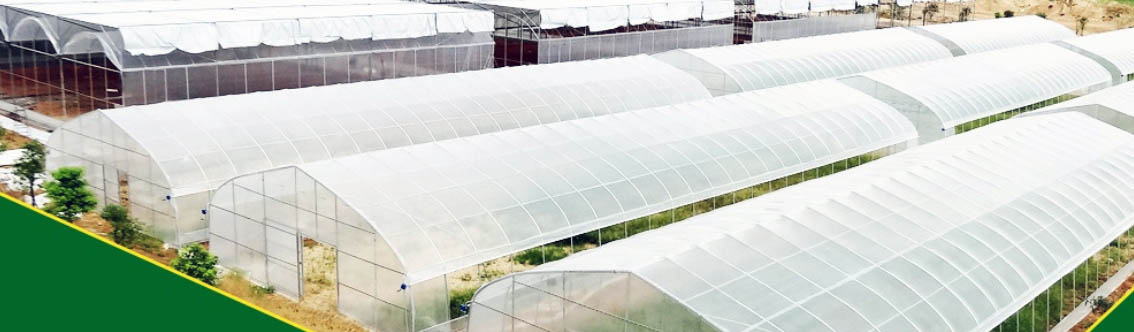
This page is about the crop, not the steel. The house on this sheet is a film covered sawtooth greenhouse, 80 m by 20 m and 1,600 square metres, under a single layer of anti-PEP polyethylene film 0.15 mm or 0.12 mm thick, carried on a hot dip galvanized steel pipe frame with aluminum clips seated in a grooved channel. It is classed as a middle scale sawtooth house and it is offered for vegetable, fruit, seed nursery and flower work. The shell does not change much between those programmes. What changes is the configuration built around it: how much of the roof and wall opens, whether the house is shaded or cooled, whether heat is added for a cold start, and whether the crop stands on the ground or on benches. The sections below take the main vegetable groups one at a time and say what each of them usually asks the configuration to do. The full range of shapes and covering options sits on our sawtooth greenhouse range page, and the narrower film houses are gathered under the film greenhouse range.
What Is Fixed on Every Order, Whatever You Grow
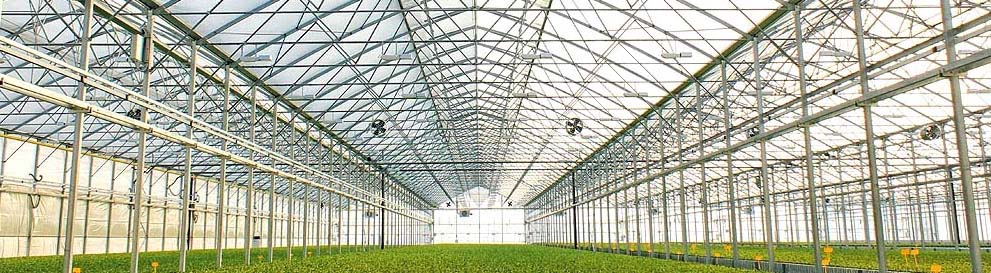
Four things are settled before the crop is discussed, because no vegetable changes them. The first is the frame: hot dip galvanized steel pipe, chosen so that the structure does not rust, with the aluminum parts belonging to the grooved channel and the clips that hold the film rather than to the load-bearing frame. The second is the covering: one layer of polyethylene, 0.15 mm or 0.12 mm, run into the special grooved channel and held with aluminum clips, a channel that does more than grip the edge because it also reinforces the panels against wind and weather. The third is the ventilation built into the shell: upright windows along the sawtooth ridge, and sidewall openings covered by insect nets and roll-up curtains, operated manually or electrically. The fourth is the load the frame is checked for, 0.35 kN/m2 of wind and 0.35 kN/m2 of snow.
Around those four, the order can be shaped. The span is available at 6.4 m, 8 m, 9.6 m or 10 m, and the total structure height runs from 4.3 m to 6.5 m. Both figures are chosen against the crop you intend rather than against a catalogue default, and the systems listed further down are added only where the growing programme needs them. On the commercial side the house is produced at 10,000 square metres a month at Ziyang, Sichuan, carries the CE standard and the Bozong trademark, is packed for export in three groups and ships to markets worldwide.
Sort the Crop by What It Cannot Tolerate
A vegetable does not come with a specification, so the practical way to configure the house is to ask what the crop cannot stand and let that answer drive the order. Four answers cover most of the vegetable work done under a house like this. Some crops cannot tolerate a still, hot head of air around a tall canopy. Some cannot tolerate a wet leaf and an insect population at the same time. Some are grown for a short window and have to leave the house healthy at the end of it. Some are simply too tall for the room they are about to be given. Each answer points at a different set of items on the order and at a different part of the shell being used harder than the rest.
It is worth saying what is not being decided here. The way a sawtooth roof and a sidewall opening actually move air, and the light that reaches a crop through a single film, are already set out on our pages on the span, height and frame load of this house and on the film choice and fixing of the covering. What follows assumes those and stays with the crop. Growers who want the crop side of the question argued from outside a supplier's catalogue can read the material on protected cultivation and vegetable production published by the FAO.
Fruiting Vegetables: Tomato, Pepper, Cucumber and Melon
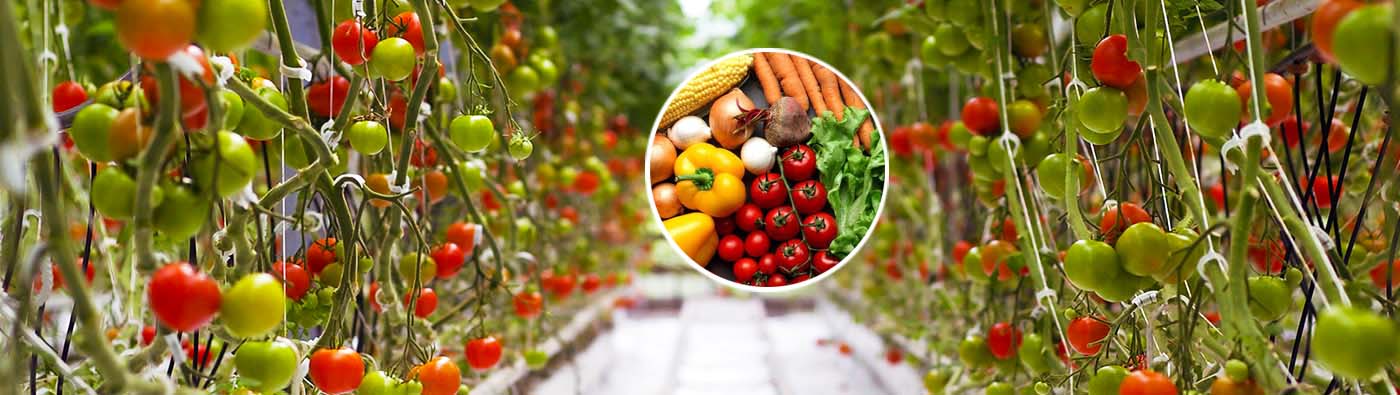
Fruiting vegetables are the tall group and they are the group that uses the vent area hardest. They carry a canopy well above the bed, they are cropped over a long season rather than a short window, and the fruit has to be picked and carried out repeatedly while the plants stay in place. Three configuration choices follow from that. The house is ordered at the upper end of the 4.3 m to 6.5 m height band, so that a tall canopy has room above it and the ridge windows sit clear of the crop. The roll-up curtains are specified as electrically operated, because a large vent area over a long season is opened and closed far too often to be a manual daily task. And shading is put on the order, because the same film that keeps the house warm in spring has to be softened over the middle of the day in summer.
The internal layout matters as much as the shell. With spans of 6.4 m, 8 m, 9.6 m or 10 m available, a wider span leaves a wider clear bay, which changes how rows and internal paths are laid out and where the crop is worked from. Irrigation and fertilization are normally added in the same order, because on this group the two systems are run together to carry a long season, and a bench or a ground bed is selected before the anchors are set rather than after. Both vent paths are in use at once on a fruiting crop: the upright windows at the ridge and the sidewall curtains, with the insect nets staying in place over the openings while the curtain is rolled up and down behind them.
Leafy Vegetables and Herbs: Lettuce, Spinach, Pak Choi
The leafy group turns the priorities around. These crops sit low, they are cut and sold on the leaf, and their two enemies are a wet leaf and a pest that reaches the leaf. Height is therefore not the driver at all, and a leafy programme can be run perfectly well at the lower end of the height band. What moves to the front of the order instead is the sidewall opening with its insect net, because the net is the barrier that keeps insects away from a crop that has no fruit to hide behind, and it has to be in place on every opening rather than on some of them. The roll-up curtain behind the net is then the tool that gets the house open early in the day and closed again before the air cools.
Shading and cooling are the second half of the answer. A leafy crop under clear summer film is asked to grow through the brightest part of the year with the least protection above it, so the shading system is the item that decides whether the house can be cropped through summer at all, and fog cooling is what carries the crop across the hottest days without soaking the leaves. The film itself is left as a single layer for this group, because a single layer keeps the covering simple and holds down the material list, and the warmth-keeping quality of a film covering is already more than a leafy crop needs in a cold start. Herbs follow the same logic as the leafy group, and so do the flower crops that fill a gap between vegetable rounds under the same shell. How commercial growers set a house up around the crop they are cutting that week, rather than around the house itself, is reported month by month in Greenhouse Grower.
Seedlings and Nursery Stock
A nursery is a different kind of customer, because the crop is only in the house for a short part of its life and the house has to serve whatever comes next. Two things are configured around that. The first is the bench: a propagation programme is usually run on benches rather than on the ground, which changes the internal height the crop actually occupies and the way the irrigation and fertilization systems are routed. The second is fine control of the air. A cooling and heating system is the usual addition for a seedling house, because the propagation window very often falls at the cold end of the year and the film's warmth-keeping property is what makes a house like this worth using at that time in the first place, while the same house has to be kept from overheating as soon as the sun comes out.
The ventilation system is the other item that appears on a nursery order more often than on any other, because a crop that is moved out and replaced several times a year cannot rely on a single setting for the whole season. The upright windows at the ridge and the sidewall curtains are the vent paths, and the operator decides how much of each is open; the addition is the gear that makes that repeatable rather than a judgement call. A seedling house also carries the whole order in the three export groups together, metal structures, covering system and install accessories, so that the benches, the film and the pipe arrive on the same site and the propagation window is not lost waiting for a part.
Roof Height, Span and the Space Above the Crop
The height band of 4.3 m to 6.5 m and the span range of 6.4 m, 8 m, 9.6 m and 10 m are specification figures, but they are chosen with the crop in view and they are the two decisions a grower most often wants to revisit. The height decides how much room the canopy has and how high the ridge windows sit above it. The span decides the width of the clear bay between columns, which is what sets how beds, paths and crop rows are arranged inside the 20 m width, and how many column lines a forklift or a barrow has to work around. A wide bay with a low roof and a tall crop is the combination that is worth avoiding, not because the frame cannot be built but because the two figures are then working against each other for the life of the house.
Both figures are read off the same drawing as the load the frame is checked for. The house is designed against 0.35 kN/m2 of wind and 0.35 kN/m2 of snow, so a change of span or height is a change to the frame and to its bracing and anchors, and not only to the bed layout. It is a far simpler matter to settle the crop, the layout and the two figures together at the quotation stage than to alter them once the pipe has been cut.
What Each Crop Group Usually Adds to the Order
| Crop group | What drives the choice | Usually added to the order |
| Fruiting vegetables | Tall canopy and a long season; both vent paths worked hard every day | Shading system, irrigation system, fertilization system, electric roll-up curtains, benches |
| Leafy vegetables and herbs | A dry leaf and a pest-free crop matter more than height | Insect nets on every sidewall opening, shading system, fog cooling, benches |
| Seedlings and nursery stock | A short propagation window at the cold end of the year, repeated through the season | Benches, cooling and heating system, irrigation system, ventilation system |
| Fruit and flower crops | Warmth for an early start, then light control once the season turns bright | Cooling and heating system, shading system, benches |
The rows are a starting point rather than a rule, and every one of the added systems is quoted on request, so the order is built to the growing programme actually intended. It is also worth noting that the house is offered as a simple and effective solution for varied and complex topographic conditions and is described as suitable for all climate conditions and adaptable to any type of landscape, which is why two growers with the same crop can end up with two different orders for the same shell.

Why the Same Frame Works on a Coastal and an Inland Plot
Whatever is grown inside, the part of the structure that decides how long the house can be left before work is needed is the galvanized coating on the pipe. Read against ISO 9223, a coating of this kind is expected to reach first maintenance in roughly 13 years in heavy industrial air, class C4, in roughly 30 years in urban conditions, class C3, in roughly 50 years in coastal conditions, class C5, and in 50 years or more without repair in clean suburban air, class C2. A vegetable plot on the coast and the same crop inland can therefore be built from the same pipe on the same drawing and still deserve two different answers on maintenance.
The figure that settles which of those lines applies is the coating thickness, because the class and the thickness together are what produce the years. The pipe on this house carries a specified average coating of 70 to 85 micrometres of zinc, read under BS EN ISO 1461 and selected against BS EN ISO 14713-1, and it is that thickness, named next to the corrosivity class of your site under ISO 9223, that places the project. For a grower this has one practical consequence: the soil, the irrigation water and the air around the beds are the same things that decide how fast the frame is consumed, so the question is worth asking at the quotation stage rather than after the first season.
Frequently Asked Questions
Q: Which configuration suits fruiting vegetables such as tomato, pepper and cucumber?
A: Order the house at the upper end of the 4.3 m to 6.5 m height band so that a tall canopy has room above it and the ridge windows sit clear of the crop. Specify the roll-up curtains as electrically operated, because a large vent area is opened and closed daily through a long season. Add the shading system for the bright middle of the day, and add irrigation and fertilization together, since the two are run as one system on this group. Select the span from 6.4 m, 8 m, 9.6 m or 10 m against the bed and path layout rather than the other way round.
A: Order the house at the upper end of the 4.3 m to 6.5 m height band so that a tall canopy has room above it and the ridge windows sit clear of the crop. Specify the roll-up curtains as electrically operated, because a large vent area is opened and closed daily through a long season. Add the shading system for the bright middle of the day, and add irrigation and fertilization together, since the two are run as one system on this group. Select the span from 6.4 m, 8 m, 9.6 m or 10 m against the bed and path layout rather than the other way round.
Q: Do leafy vegetables need a different vent setup from fruiting crops?
A: Yes, and the difference is in the priority rather than in the hardware. The vent paths are the same upright roof windows and sidewall roll-up curtains, but a leafy crop needs the insect net in place on every sidewall opening, because the leaf has no fruit to hide behind and the net is the barrier that keeps insects off it. The curtain behind the net is then worked to open the house early and close it before the air cools. Height matters far less for these crops, and shading plus fog cooling are the items that allow a leafy programme to run through the brightest part of the year.
A: Yes, and the difference is in the priority rather than in the hardware. The vent paths are the same upright roof windows and sidewall roll-up curtains, but a leafy crop needs the insect net in place on every sidewall opening, because the leaf has no fruit to hide behind and the net is the barrier that keeps insects off it. The curtain behind the net is then worked to open the house early and close it before the air cools. Height matters far less for these crops, and shading plus fog cooling are the items that allow a leafy programme to run through the brightest part of the year.
Q: What does a seedling nursery add to this greenhouse?
A: Benches, and a cooling and heating system. Propagation is usually run on benches rather than on the ground, which changes the height the crop occupies and the routing of the irrigation and fertilization systems. A cooling and heating system is the usual addition because the propagation window often falls at the cold end of the year, where the warmth-keeping quality of the film covering is what makes the house worth using, while the same house must be kept from overheating as soon as the sun is out. A ventilation system appears on nursery orders more often than on other vegetable work, because the crop is replaced several times a season.
A: Benches, and a cooling and heating system. Propagation is usually run on benches rather than on the ground, which changes the height the crop occupies and the routing of the irrigation and fertilization systems. A cooling and heating system is the usual addition because the propagation window often falls at the cold end of the year, where the warmth-keeping quality of the film covering is what makes the house worth using, while the same house must be kept from overheating as soon as the sun is out. A ventilation system appears on nursery orders more often than on other vegetable work, because the crop is replaced several times a season.
Q: How do the height and span ranges affect the crop?
A: The total structure height runs from 4.3 m to 6.5 m and the span is available at 6.4 m, 8 m, 9.6 m or 10 m. Height sets how much room the canopy has and how high the ridge windows sit above it; span sets the clear bay between columns, which is what decides how beds, crop rows and internal paths are arranged across the 20 m width. A tall crop under a low roof, or a wide bay with a narrow working layout, is the pairing worth avoiding. Any change to either figure is also a change to the frame, its bracing and its anchors, because the house is designed against 0.35 kN/m2 of wind and 0.35 kN/m2 of snow.
A: The total structure height runs from 4.3 m to 6.5 m and the span is available at 6.4 m, 8 m, 9.6 m or 10 m. Height sets how much room the canopy has and how high the ridge windows sit above it; span sets the clear bay between columns, which is what decides how beds, crop rows and internal paths are arranged across the 20 m width. A tall crop under a low roof, or a wide bay with a narrow working layout, is the pairing worth avoiding. Any change to either figure is also a change to the frame, its bracing and its anchors, because the house is designed against 0.35 kN/m2 of wind and 0.35 kN/m2 of snow.
Q: How long does the galvanized frame last before maintenance?
A: It depends on the air around the site. Read against ISO 9223, a coating of this kind reaches first maintenance in roughly 13 years in heavy industrial air (class C4), roughly 30 years in urban conditions (class C3), roughly 50 years in coastal conditions (class C5), and 50 years or more without repair in clean suburban air (class C2). The coating on the pipe of this house is a specified average of 70 to 85 micrometres of zinc, read under BS EN ISO 1461 and selected against BS EN ISO 14713-1. Name the corrosivity class of your site and the line follows from the thickness.
A: It depends on the air around the site. Read against ISO 9223, a coating of this kind reaches first maintenance in roughly 13 years in heavy industrial air (class C4), roughly 30 years in urban conditions (class C3), roughly 50 years in coastal conditions (class C5), and 50 years or more without repair in clean suburban air (class C2). The coating on the pipe of this house is a specified average of 70 to 85 micrometres of zinc, read under BS EN ISO 1461 and selected against BS EN ISO 14713-1. Name the corrosivity class of your site and the line follows from the thickness.
Q: Can your engineers guide the installation on site?
A: Yes. Where it is wanted we send engineers to foreign countries to guide the installation, working alongside the site team, and every year customers visit the factory at Ziyang, Sichuan for business cooperation. The order travels in three export groups that match the build: metal structures, covering system and install accessories, so the pipe, the film with its grooved channel and clips, and the opening gear all arrive together. The house carries the CE standard and is produced at 10,000 square metres a month. The covering and the frame it hangs on are described on our sawtooth greenhouse range page.
A: Yes. Where it is wanted we send engineers to foreign countries to guide the installation, working alongside the site team, and every year customers visit the factory at Ziyang, Sichuan for business cooperation. The order travels in three export groups that match the build: metal structures, covering system and install accessories, so the pipe, the film with its grooved channel and clips, and the opening gear all arrive together. The house carries the CE standard and is produced at 10,000 square metres a month. The covering and the frame it hangs on are described on our sawtooth greenhouse range page.
Contact
To talk through the crop you intend and the configuration that follows from it, call us on +86 191 5068 3942 or write to sales@cngreenhouses.com. Tell us the crop, the growing window and the site, and we will set the height, the span and the added systems against it. Every house is backed by a long-term structural warranty, and each one is built with the grooved channel frame that reinforces the panels against wind and weather.

Note: If you're interested in the product, please submit your requirements and contacts and then we will contact you in two days. We promise that all your informations won't be leaked to anyone.
 Deutsch
 Español
 Français
 Italiano
 Português
 日本の
 한국어
 العربية
 български
 hrvatski
 česky
 Dansk
 Nederlands
 suomi
 Ελληνικά
 हिन्दी
 norsk
 Polski
 Română
 русский
 Svenska